
Search Floyd County Court Records
Floyd County court records are not held in one single database. Superior Court civil, criminal, divorce, equity, and land-title records start with the Clerk of Superior Court and the county court portal at floydcourts.com. The Clerk's office at floydsuperiorcourt.com also points users to case search, forms, staff contacts, real estate records, and copy procedures. Magistrate Court records are linked from the county Magistrate page, while Probate Court uses Georgia Probate Records for estate, guardianship, marriage, traffic, will, and calendar searches.
The safest Floyd County court records search starts with the court named on the document, notice, ticket, warrant, or filing. Rome Municipal Court traffic citations are handled through the City of Rome and Tyler payment portal. Real estate records use the Cott Systems land-record index. If the online system is blocked, incomplete, or does not expose certified copies, contact the office that keeps the record. Floyd County also uses NextRequest as a countywide open-records fallback for records that are not available through a court-specific channel.
- Identify the court or office tied to the record: Superior, Magistrate, Probate, Juvenile, Rome Municipal, the Sheriff, or a state agency.
- Use the matching official portal, such as floydcourts.com for court cases, Georgia Probate Records for probate and marriage, or Tyler for Rome citations.
- Search by the fields the portal allows, then compare names, case type, filing date, court, and hearing details before relying on a match.
- For copies, certification, sealed matters, or older files, call or visit the Clerk of Superior Court, Probate Court, Magistrate Court, or municipal court that holds the file.
- If no court-specific route fits, submit a records request through Floyd County NextRequest and describe the agency, date range, names, and record type.
The Floyd County government site is the broadest official starting point for court departments, open records, public notices, and office pages.

That official site helps route Floyd County court users to the courthouse offices, public-records portal, and department pages that sit outside the Clerk's case-search system.
Floyd County Court System
Floyd County is part of Georgia's trial-court structure. The county's general-jurisdiction court is Superior Court, and Floyd County is coterminous with the Rome Judicial Circuit. That means the Rome Judicial Circuit has the same boundaries as Floyd County, rather than covering several counties. The county page places the circuit in Georgia's 7th Judicial Administrative District and describes Superior Court as the court with exclusive constitutional authority over felony cases, divorce, title to land, equity, habeas corpus, mandamus, quo warranto, prohibition, and declaratory judgments.
Floyd County lower courts handle narrower work. Magistrate Court hears small civil claims, dispossessories, garnishments, bad checks, county ordinances, warrants, first appearances, bond hearings, and preliminary hearings. Probate Court handles estates, guardianships, conservatorships, marriage licenses, weapons carry licenses, and traffic citations issued outside city limits. Juvenile Court handles delinquency, dependency, CHINS, juvenile traffic, and transfers. Rome Municipal Court handles city traffic and ordinance matters.
Case flow: Magistrate, Probate, Juvenile, or Municipal Court › Floyd County Superior Court when review or transfer applies › Georgia Court of Appeals or Supreme Court of Georgia, depending on subject matter.
| Court | Jurisdiction | Common Record Types |
|---|---|---|
| Superior Court | General jurisdiction and Rome Judicial Circuit trial court | Felony, divorce, major civil, land-title, equity, certiorari, TPO, appeals |
| Magistrate Court | Limited civil, warrant, and preliminary criminal functions | Small claims, evictions, garnishments, warrants, first appearances, county ordinances |
| Probate Court | Probate, marriage, weapons carry, and outside-city traffic | Estates, wills, guardianships, marriage licenses, traffic dockets, petitions |
| Juvenile Court | Cases involving children and youth traffic matters | Delinquency, dependency, CHINS, juvenile traffic, transfers |
| Rome Municipal Court | City traffic and ordinance court | Uniform traffic citations, city ordinances, environmental and animal-control cases |
The county's Superior Court overview describes the Rome Judicial Circuit and the local trial-court role.
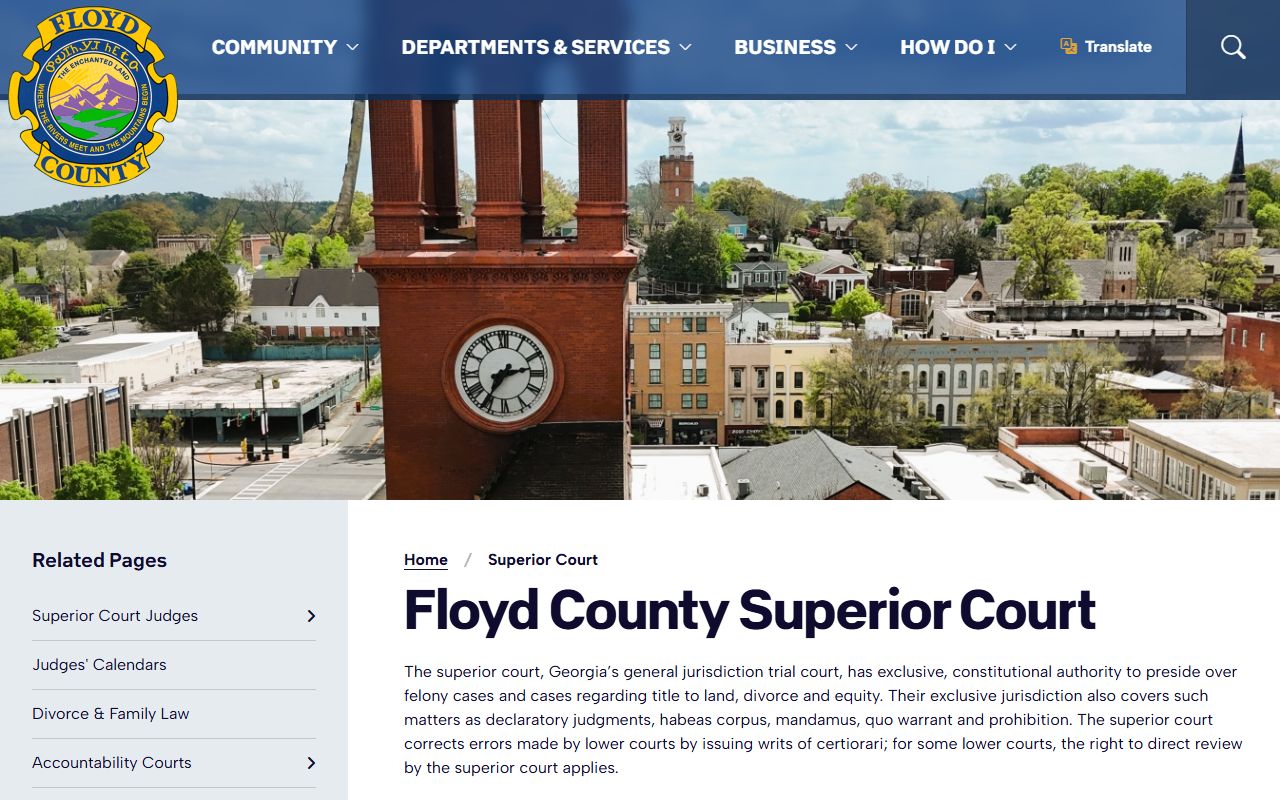
That overview is useful when a Floyd County record search needs the trial-court division rather than a municipal, probate, or sheriff record.
Floyd County Court Locations
Most Floyd County court business points to the courthouse complex at 3 Government Plaza in Rome. Superior Court, Probate Court, Juvenile Court, the District Attorney, and the Clerk of Superior Court all use that courthouse address in the official material. Magistrate Court is also at 3 Government Plaza, Suite 227. The Public Defender is nearby at 12 East 4th Avenue, Suite 10, and the Sheriff's Office is away from the court campus on New Calhoun Highway.
Floyd County Court Record Types
Floyd County court records include civil filings, felony criminal files, divorce records, probate matters, traffic cases, warrants, real estate records, and local municipal citations. The key is custodianship. The Clerk of Superior Court keeps Superior Court civil and criminal files, real estate instruments, liens, trade names, notary records, and jury-related records. Probate Court keeps probate and marriage-license material. The Sheriff publishes current inmate and warrant information. Rome Municipal Court handles city citation payments and related court records.
Some records overlap. A traffic stop may create a municipal citation, a Probate Court traffic docket, a juvenile traffic hearing, or a criminal court file if the charge is serious. An arrest may appear first in the jail roster, then in a warrant result, then in a Superior Court criminal case after charges are filed. A divorce belongs to Superior Court, but marriage licenses belong to Probate Court. Certified copies usually come from the office that filed the original record.
- Superior Court records: felony, divorce, civil, equity, land-title, TPO, and appeal or certiorari matters.
- Magistrate Court records: small claims, dispossessories, garnishments, warrants, first appearances, bonds, and county ordinance cases.
- Probate Court records: estates, wills, guardianships, marriage licenses, weapons carry, and outside-city traffic citations.
- Sheriff records: current inmates, active warrants, most wanted notices, bonds, visitation, mail, and open-records requests.
- Traffic records: Rome Municipal, Probate, Juvenile, Cave Spring, DDS driver history, and serious traffic cases that may enter criminal court.
Floyd County Court Records Show
A Floyd County court record usually shows enough information to identify the case, parties, court, filings, hearing history, and outcome. The exact fields depend on the court and portal. The research file could not confirm public Superior Court sample fields because the official case-search endpoint blocked automated inspection, so field descriptions should be treated as common court-file contents rather than a promise that every public search result displays each item.
| Field | What It Shows |
|---|---|
| Case number | The court's tracking number, such as Superior, Magistrate, Probate, Municipal, warrant, or traffic formats. |
| Parties | Plaintiff and defendant, State and defendant, petitioner and respondent, decedent, ward, or interested party. |
| Dates | Filing, arrest, court, hearing, disposition, judgment, recording, or docket-event dates. |
| Court and judge | The court level, division, judge, clerk office, or courtroom tied to the event. |
| Docket events | Complaints, motions, orders, hearings, bonds, pleas, sentences, judgments, continuances, appeals, or remittiturs. |
| Financial fields | Fines, costs, restitution, bond, filing fees, publication charges, copy fees, recording fees, or subscription print costs. |
Public Access to Floyd County Court Records
Georgia public-record access begins with the Georgia Open Records Act, but court records also depend on court rules, confidentiality statutes, and the office that keeps the file. Floyd County's NextRequest portal identifies County Clerk Lauren Chumbler as the official County Records Custodian for Georgia Open Records Act purposes. For court case files, a requester should still start with the court clerk or court office because certified copies, sealed files, and active dockets are controlled by the court custodian.
Key statutes and rules:
O.C.G.A. 50-18-70 et seq. states the open-records presumption and allows access unless a law or court order restricts the record.
O.C.G.A. 50-18-71 covers inspection, copying, retrieval, redaction, and allowed fee procedures.
O.C.G.A. 35-3-37 governs criminal-history record restriction for many records people call expunged.
Uniform Superior Court Rule 21 is the court-file access rule used when a court file is limited or sealed by required findings.
Restricted Floyd County Court Files
Not every Floyd County court file is fully public. Juvenile Court records are more limited than adult civil or criminal records. Adoption files are not open case files. Guardianship, conservatorship, and mental-health-related probate materials can contain private medical and family information. Social Security numbers, financial account data, protected addresses, minor names, and similar identifiers may be redacted from public-facing files. A sealed file or restricted criminal-history entry may still exist for law-enforcement, prosecutor, court, or other authorized uses.
Georgia uses the term record restriction for many criminal-history matters. The GBI explains that arrests after July 1, 2013 are generally handled through the prosecutor, while older arrests require applying through the arresting agency. Court-file sealing is separate. A Floyd County court docket may remain visible unless a judge seals or restricts court access. For certified answers about sealed case access, contact the Clerk of Superior Court or the specific court that entered the order.
The GBI record restriction page explains how Georgia criminal-history limits differ from court-file copies.
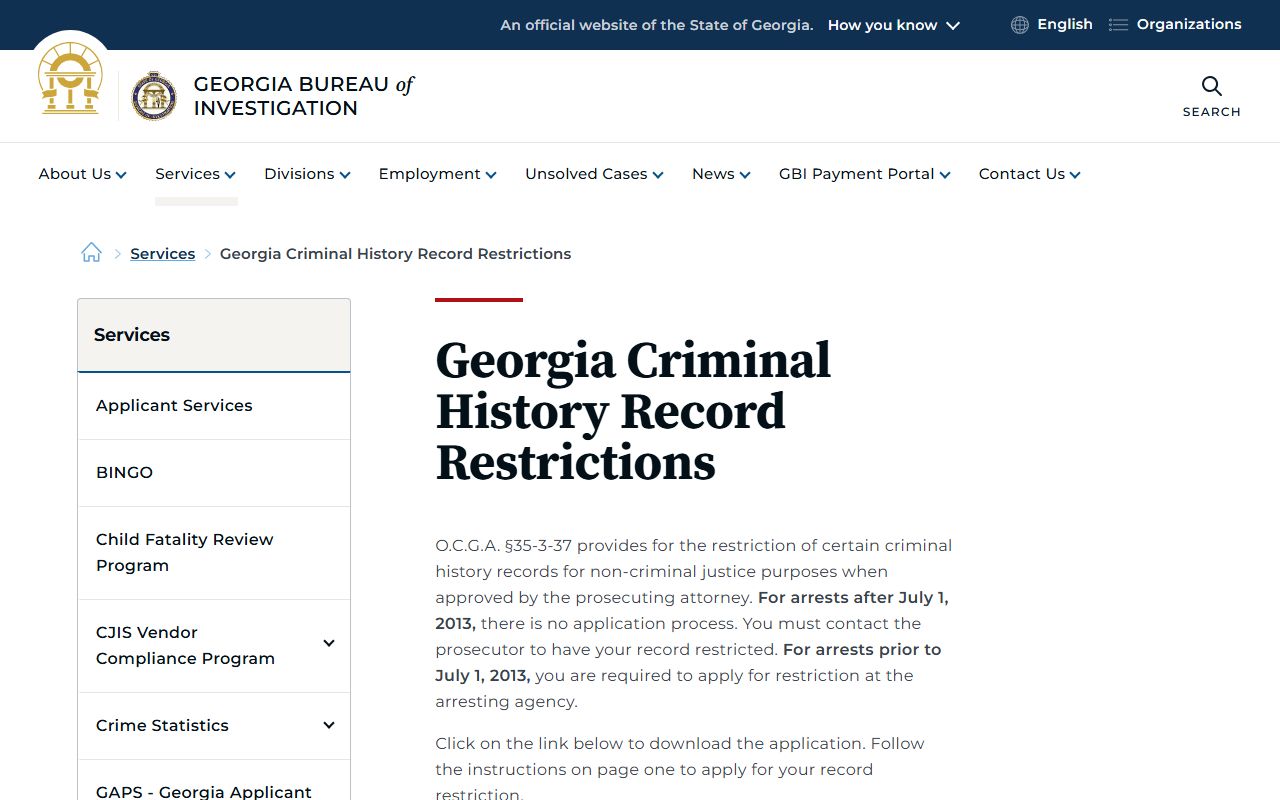
That distinction matters in Floyd County because an arrest, court case, jail roster entry, and statewide criminal-history record can each follow different access rules.
Floyd County Clerk Records
The Clerk of Superior Court is Floyd County's primary court-record custodian for Superior Court civil and criminal case files. The current clerk is Mary Hardin Thornton. The office is listed at 3 Government Plaza, Suite 101, Rome, Georgia 30161, with a mailing address of P.O. Box 1110, Rome, Georgia 30162. The Clerk's local site lists 706-291-5190, while the GSCCCA statewide directory lists (706) 314-1860. Office hours in the GSCCCA profile are Monday through Friday, 8:00 AM to 5:00 PM except holidays.
The Clerk's office also handles real estate records, liens, trade names, notary appointments, Board of Equalization, jury call-in, and other Superior Court services. The real estate page says faxed documents are not accepted for recording because Georgia law requires original signatures. It also states that, effective January 1, 2025, self-filers must e-file real estate documents and all filers must be ID verified through the Clerks' Authority.
| Item | Fee or note |
|---|---|
| General civil Superior Court filing | $213 plus applicable service fees |
| Family violence petitions | No filing fee or sheriff service fee |
| Uncertified copy, unassisted | $0.50 per page |
| Uncertified copy, assisted | $1 per page |
| Certified or exemplified copy | $2.50 first page |
| Appeal record preparation | $1 per page |
Floyd County Criminal Records
Floyd County criminal court records are separate from arrest logs, active warrant lists, and jail custody records. A criminal case file begins after a case opens in court and may include charges as filed, arraignment, pleas, motions, hearing dates, verdict or plea, disposition, sentence, probation, bond entries, and appeal activity. The District Attorney, Leigh Patterson, prosecutes misdemeanors and felonies in Floyd County from the courthouse at Government Plaza. The Public Defender represents indigent clients in criminal, delinquent, and dependency matters through the Rome Judicial Circuit office.
Warrants use a different channel. The Floyd County Sheriff's Warrant Division maintains original warrants and keeps them current in NCIC and GCIC. The Sheriff's active warrant portal shows name, race, sex, age, and charge when a warrant is entered in the Sheriff's system. The Warrant Division phone line is 706-236-2466. Bench warrants from Rome Municipal Court, traffic failures to appear in Probate Court, and Magistrate warrant matters may require calling the issuing court rather than relying only on the Sheriff portal.
Floyd County Inmate Records
The Floyd County Sheriff's Office serves county jail and law-enforcement record needs from 2526 New Calhoun Highway in Rome. Sheriff Dave Roberson is identified in official sheriff materials. The jail page describes the facility as a 256,000-square-foot building with 776 beds, serving Floyd County, the City of Rome, and Cave Spring. It houses pretrial detainees, county-sentenced inmates, and state-sentenced inmates, and the page lists a 2020 average daily inmate population of 600.
The current inmate list shows searchable custody entries with name, age, sex, race, arrest date, status labels, charges, warrant references, and bond fields. The Sheriff's app, Floyd County Sheriff Georgia or Floyd Sheriff GA, provides public-safety news, tips, and interactive features, but the store text inspected did not advertise app-only inmate or warrant lookup. For people moved to state custody, the Georgia Department of Corrections offender query is separate from the county jail roster.
Floyd County Probate Records
Floyd County Probate Court is a major records office, not only an estate court. It handles probate of wills, estate administration, adult guardianships and conservatorships, temporary guardianships of minors, marriage licenses, concealed weapons carry permits, and traffic citations issued outside city limits. The court is at 3 Government Plaza in Rome and lists Judge Steven R. Burkhalter as probate judge. Georgia Probate Records provides online modules for estates, recorded marriage licenses, traffic dockets, wills, guardianships, death information, miscellaneous filings, applications, calendars, and fee calculation.
Marriage licenses are handled by Probate Court. Applicants need current valid state-issued identification, must be 18 or older, and must bring the most recent final divorce decree or death certificate if a prior marriage ended by divorce or death. The posted cost is $66 without counseling or $26 with certification of premarital counseling. Divorce records are different. Divorce falls under Superior Court jurisdiction and is filed through the Clerk of Superior Court.
Floyd County Traffic Records
Floyd County traffic records depend on the place, court, and age of the driver. Rome Municipal Court handles regular uniform traffic citations and city ordinance matters inside Rome. Probate Court handles traffic citations issued outside city limits. Juvenile Court handles traffic offenses by youth age 16 and under, and those juveniles must appear with a parent. Cave Spring Municipal Court holds court at City Hall, and citations list the assigned date.
A court traffic record is not the same as a Georgia DDS driver record. The court record shows the local citation, court date, plea or payment status, fine, disposition, and possible failure-to-appear activity. The DDS driver history shows license status, convictions, points, suspensions, revocations, and CDL consequences. Georgia DDS offers 3-year, 7-year, and lifetime MVR options through online, in-person, mail, app, and business channels.
Floyd County Specialty Courts
Floyd County has official Superior Court accountability courts. Drug Court is described as a post-plea accountability court for non-violent, substance-involved offenders. It uses treatment, structure, and judicial oversight as an alternative to incarceration. The official page says the program was recognized in 2025 by the Georgia Council of Accountability Court Judges as a Model Court. Coordinator Cam Parks is listed for Floyd County Drug Court.
The Rome Circuit Mental Health Court STAR Program is designed to reduce incarceration and hospitalization for participants with mental-health needs. It uses judicial guidance, intensive supervision, treatment, community support, drug screening, curfew checks, and weekly court appearances. The program lasts 18 to 24 months, has five phases, and charges a $1,000 participation fee. The CACJ directory confirms that the Rome Circuit Mental Health Court serves Floyd County.
Reading Floyd County Court Terms
Court records use short terms that can change the meaning of a case. A charge is an accusation or filed offense. A conviction is an outcome after a guilty plea, verdict, or other final finding. A docket is the court's chronological list of filings and events. A disposition is the final or current outcome. A bond is the money, property, or condition that allows release while the case is pending.
- Plaintiff
- The person or entity filing a civil case.
- Defendant
- The person sued in civil court or accused in a criminal case.
- Petitioner
- The person asking the court for relief in a divorce, probate, TPO, or similar case.
- Disposition
- The result or current outcome of a charge, claim, or case.
- FiFa
- A fieri facias, which is a writ used to record or enforce a judgment.
Floyd County Court History
Floyd County was created by an act of December 3, 1832 from Cherokee County and named for Maj. Gen. John Floyd. Historical research lists early county officers commissioned in March 1833, including Andrew H. Johnston as sheriff and Edwin G. Rogers as Clerk Superior Court. Rome developed where the Etowah and Oostanaula rivers form the Coosa River, and the county court system remains centered in Rome.
New Georgia Encyclopedia states that the current Floyd County Courthouse was built in 1995 and is the county's sixth courthouse. Georgia's Rome identifies the Historic Floyd County Courthouse as an 1892 Romanesque Revival building. A March 23, 2026 fire caused major damage to that historic courthouse and affected nearby Government Plaza offices, but the modern court complex is the address used for Superior, Probate, Magistrate, Juvenile, and District Attorney business in the research file.
The New Georgia Encyclopedia courthouse entry gives local context for Floyd County's courthouse history.
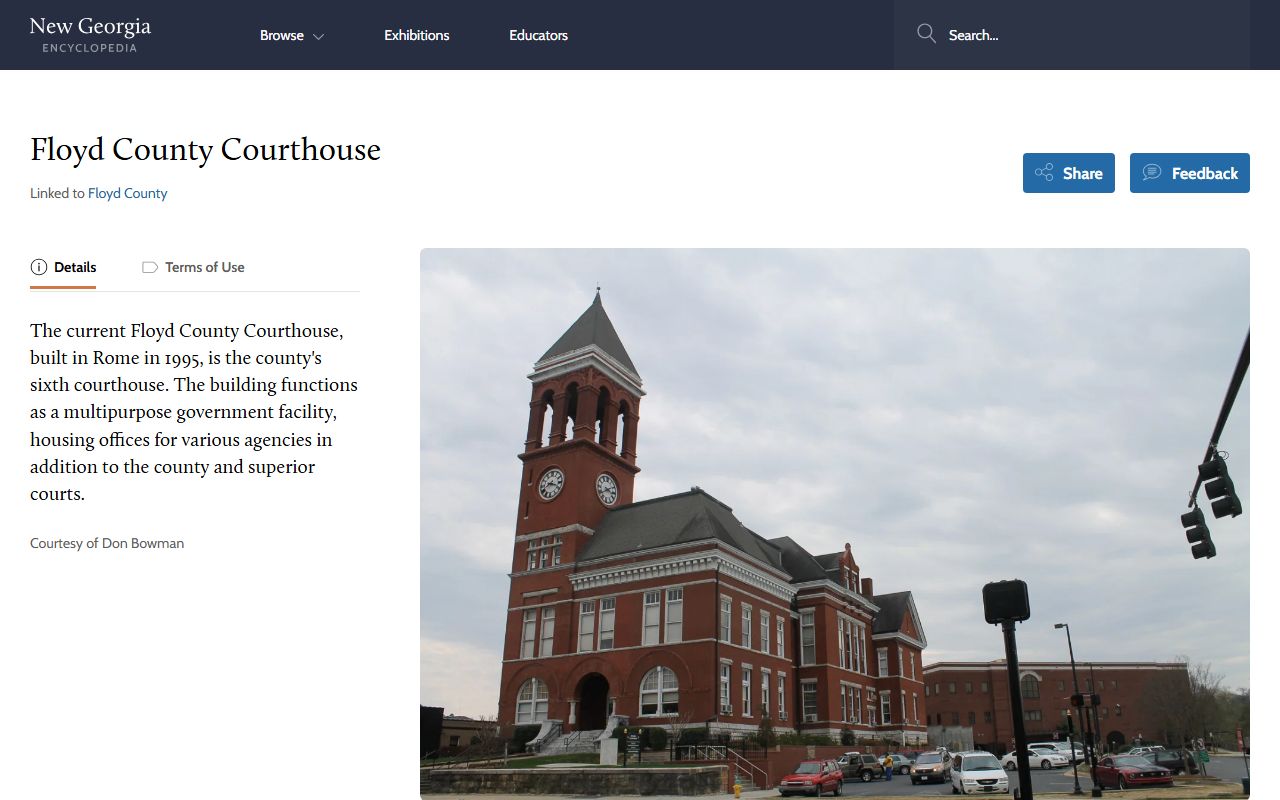
Historic courthouse details explain why some county office notices refer to Government Plaza, the historic courthouse, and nearby temporary relocation points.
The Georgia's Rome historic courthouse page adds the 1892 courthouse context and fire-related relocation note.
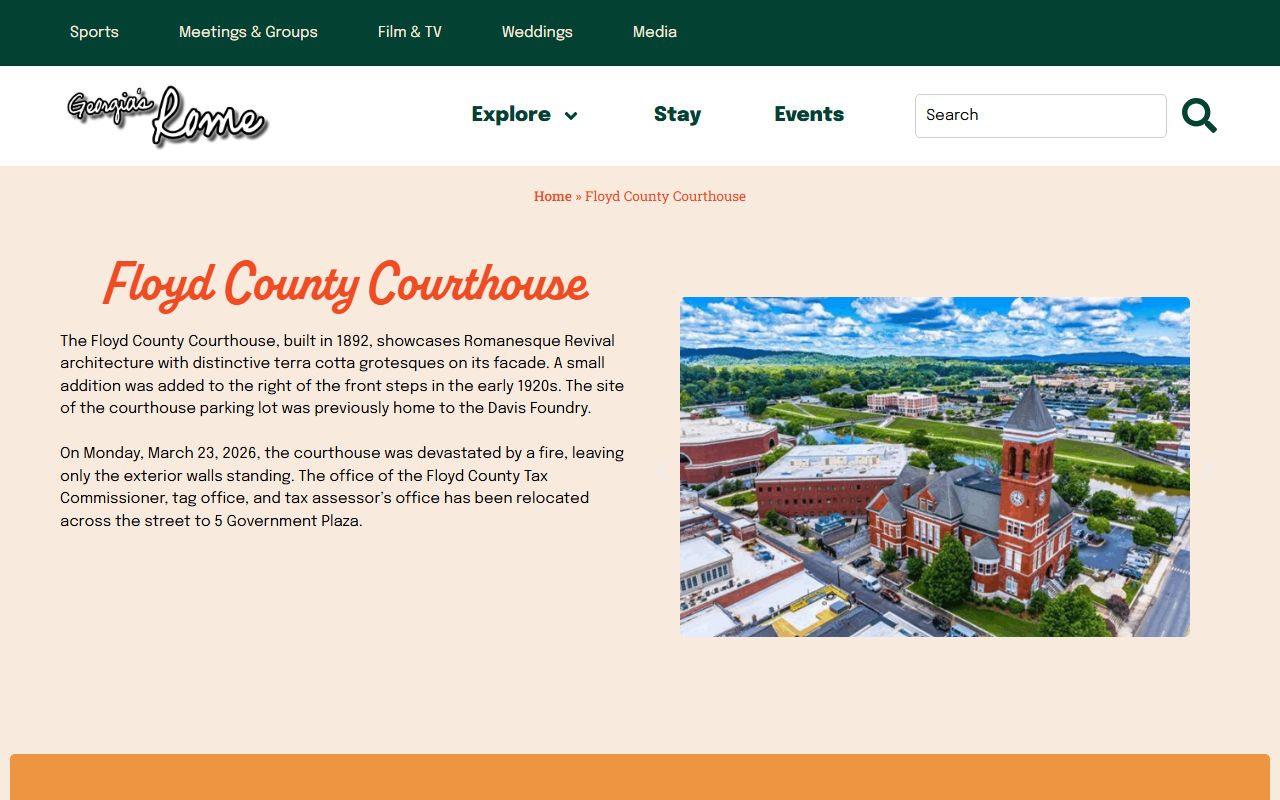
That background is useful for visitors trying to separate the historic courthouse landmark from the active court offices at the modern judicial center.
Floyd County Superior Judges
Floyd County Superior Court has four judicial divisions. The research file identifies Division One as Judge John E. Niedrach at 3 Government Plaza, Suite 312, with phone (706) 291-5121 and fax (706) 291-5278. It also identifies Judge William F. Sparks for Division Two, Judge Bryan Thomas Johnson for Division Three, and Judge Kay Ann King for Division Four. Phone details for divisions two through four were not fully captured in the official snippet, so the judge list should not invent direct numbers.
The Superior Court judges page is the official local page for Floyd County Superior Court divisions.
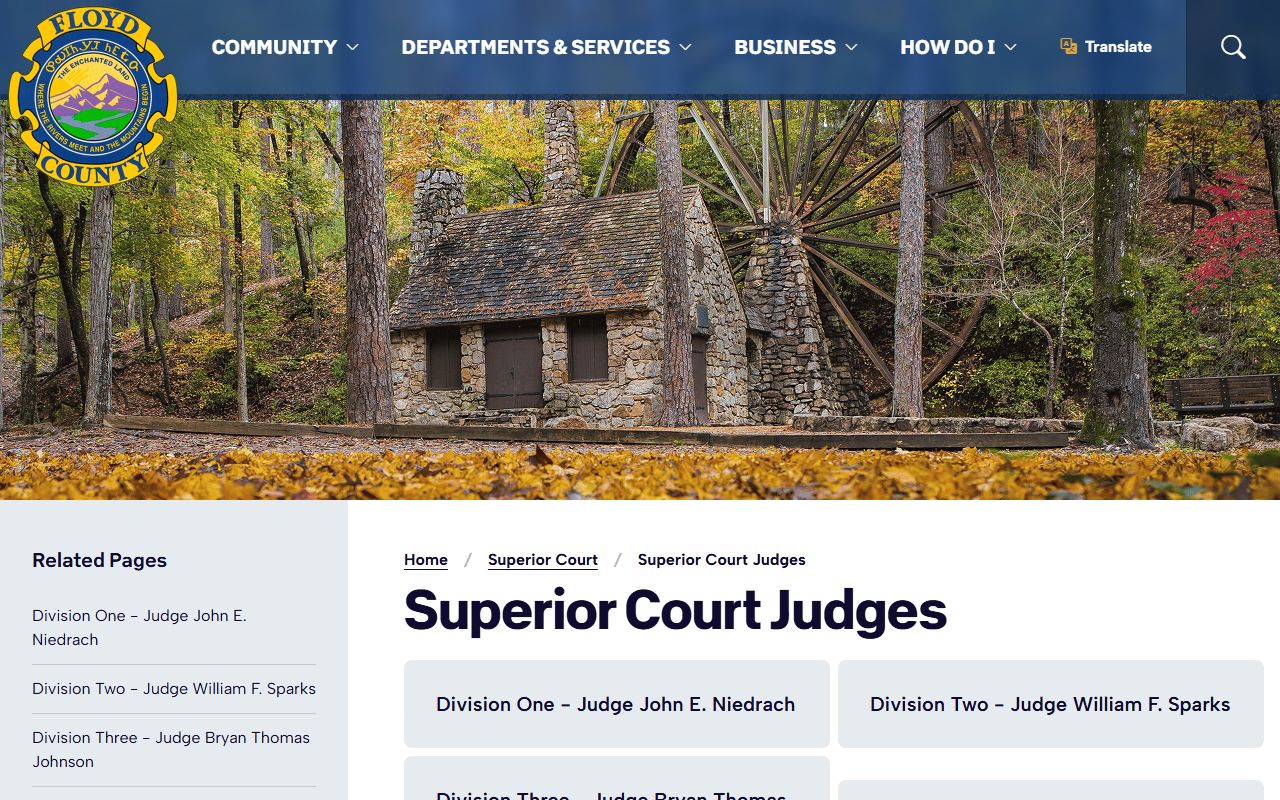
Judge and division information helps users confirm whether a docket event, order, or hearing notice belongs to the correct Superior Court division.
Floyd County Court Records FAQ
Where are Floyd County Superior Court records kept?
Superior Court civil and criminal case files are kept by the Clerk of Superior Court. The office is at 3 Government Plaza, Suite 101 in Rome, and the Clerk's site links to case search, staff contacts, forms, fee schedules, real estate records, and certified-copy routes.
Can Floyd County Probate Court records be searched online?
Yes. Georgia Probate Records is the online channel for Floyd County estate information, recorded marriage licenses, traffic dockets, wills, guardianships, death information, miscellaneous filings, marriage applications, weapons carry applications, calendars, and fee calculation.
Are Floyd County arrest records the same as criminal court records?
No. An arrest or jail roster entry shows custody and booking-related information. A criminal court record is the court file created after charges are filed and may include pleas, motions, hearings, disposition, sentence, and appeal activity.
Who handles Floyd County warrants?
The Floyd County Sheriff's Warrant Division maintains original warrants and updates NCIC and GCIC status. The online active-warrant portal is a public tool, but confirmation should come from the Warrant Division or the court that issued the warrant.
Where are Rome traffic tickets searched?
Rome Municipal Court uses the Tyler Municipal Online Payments portal for payable city traffic matters. If the citation cannot be found online, the City of Rome page instructs users to call 706-238-5150.
How are certified Floyd County court copies requested?
Certified copies come from the office that keeps the file. Superior Court copies go through the Clerk of Superior Court, marriage and probate copies go through Probate Court, and municipal citation records go through the relevant city court.